
Why Backlinks Are Not Indexed
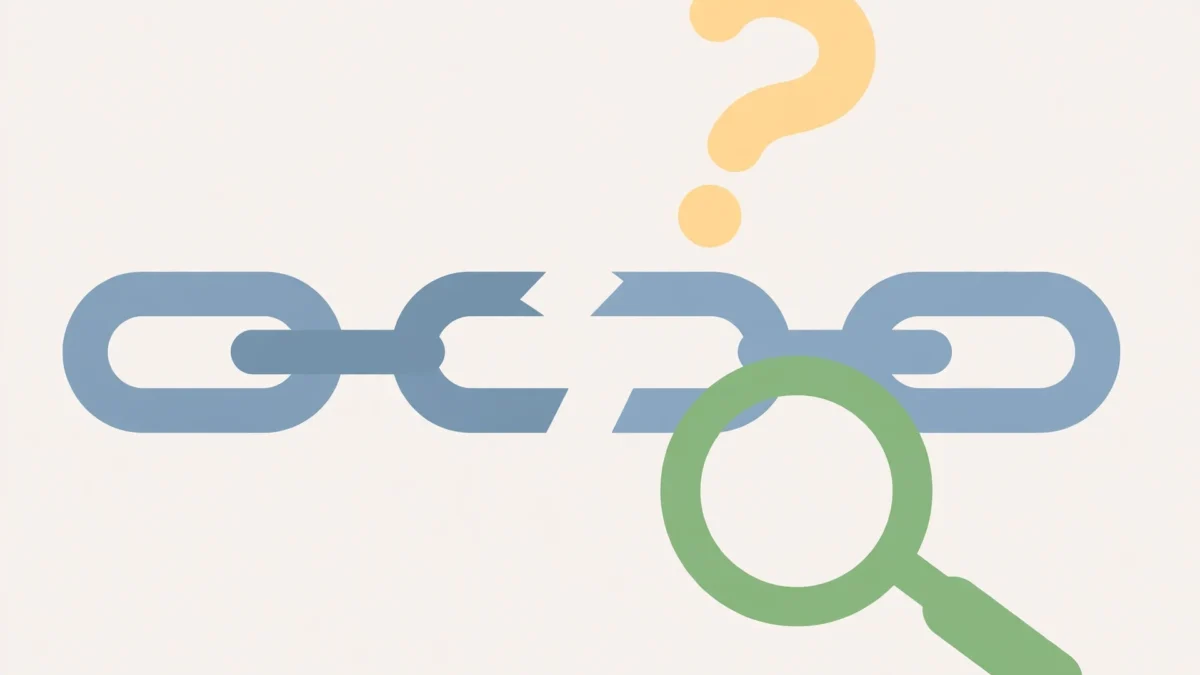
In the intricate world of search engine optimization, backlinks remain a cornerstone of organic visibility. However, a common frustration for SEO professionals and website owners alike is the phenomenon of acquiring backlinks that seemingly disappear into the digital ether, failing to be indexed by search engines like Google or Bing. Why backlinks are not indexed can lead to a sense of wasted effort and a diminished return on link-building investments.
The simple truth is that not every backlink you build or acquire will be indexed. Search engines employ sophisticated algorithms to crawl the vast web, discover new content, and then decide which of that content-including embedded links-is worthy of being added to their colossal index. A multitude of factors, ranging from technical impediments on the linking site to the overall quality and relevance of the backlink itself, dictate whether a link will be processed and considered by ranking algorithms. Understanding these underlying reasons is crucial for developing effective and efficient link-building strategies that yield tangible SEO benefits.
Understanding the Backlink Indexing Process
Before diving into why backlinks are not indexed, it is essential to grasp how search engines generally discover and process information across the web. This multi-stage process begins with crawling, proceeds to indexing, and culminates in ranking.
Crawling: The Discovery Phase
Crawling is the first step where search engine bots, often called spiders or web crawlers, explore the internet. They follow links from known pages to discover new and updated content. When a bot encounters a hyperlink, it records it for potential future crawling.
The speed and frequency with which a search engine crawls a particular website are influenced by various factors. These include the site’s authority, its update frequency, and its overall crawl budget. A backlink must first be discovered by a crawler before it can even be considered for indexing.
- Internal Links: A strong internal linking structure on the linking site helps crawlers find the page containing your backlink.
- External Links: Other reputable sites linking to the page where your backlink resides can increase its discoverability.
- Sitemaps: XML sitemaps provide a roadmap for crawlers, though they primarily cover the site’s own pages, not necessarily outbound links.
- Update Frequency: Pages updated more frequently tend to be crawled more often, potentially leading to faster discovery of new links.
- Domain Authority: High-authority domains are crawled more frequently and deeply, making links from them more likely to be found quickly.
Indexing: The Processing and Storage Phase
Once a search engine bot has crawled a page and discovered a backlink, it then moves on to the indexing phase. Indexing is not merely about finding a link; it involves analyzing the page’s content, understanding its context, and deciding whether it should be added to the search engine’s massive database.
During indexing, the search engine processes the link’s anchor text, the content surrounding the link, and the overall quality and relevance of the linking page. It evaluates whether the link provides value or is simply an attempt to manipulate rankings. If the link and its surrounding content meet specific quality thresholds, the search engine will add it to its index, allowing it to potentially influence rankings.
Distinguishing Discovery from Indexing
It’s vital to differentiate between a backlink being “discovered” and being “indexed.” A link can be discovered by a crawler, meaning the bot saw it and added it to its queue, but still not be indexed. This often happens if the linking page itself is deemed low quality, irrelevant, or blocked from indexing by technical directives.
For a backlink to be truly beneficial, it must be indexed. An unindexed backlink is, in essence, invisible to the search algorithm and will not pass any SEO value, often referred to as “link juice” or “ranking signals.” Therefore, simply acquiring a link is not enough; its indexability is paramount.
Technical Barriers Preventing Backlink Indexing
Many reasons why backlinks are not indexed are rooted in technical configurations on the linking website. These technical directives instruct search engine crawlers and indexers on how to treat specific pages or links. If these are set incorrectly or deliberately to prevent indexing, your backlink will never make it into the search engine’s index.
NoFollow, UGC, and Sponsored Attributes
These are HTML attributes applied to the <a> tag to give search engines hints about the nature of the link. While search engines have stated they may treat these as hints rather than strict directives, they still significantly reduce the likelihood of a backlink being indexed and passing equity.
rel="nofollow": This attribute traditionally told search engines not to follow the link and not to pass any ranking credit. It’s commonly used for comments, forums, and other user-generated content where the site owner doesn’t want to endorse the linked page.rel="ugc": Introduced by Google in 2019, this attribute signifies “User-Generated Content” links, such as those in comments and forum posts. It’s a clearer signal that the link comes from a user rather than the site editor.rel="sponsored": Also introduced in 2019, this attribute identifies links that were created as part of advertisements, sponsorships, or other paid agreements. Google requires paid links to be identified this way to prevent manipulation.
If your backlink has any of these attributes, its chances of being indexed and passing significant SEO value are dramatically reduced. While Google might still crawl them, they are far less likely to be indexed as a positive ranking signal for your site.
Robots.txt Disallow Directives
The robots.txt file is a plain text file located in the root directory of a website. It instructs search engine crawlers which parts of the site they are allowed or not allowed to access. If the page containing your backlink is disallowed by the robots.txt file, crawlers will not be able to visit that page.
When a crawler is blocked from accessing a page via robots.txt, it cannot discover any links on that page, including your backlink. Consequently, your backlink will not be indexed because the search engine literally never saw it. This is a common issue on staging sites, internal pages, or sections designed to be private.
NoIndex Meta Tag or HTTP Header
Even if a page is allowed to be crawled by robots.txt, it can still be prevented from being indexed by a noindex directive. This directive can appear in two forms:
- Meta Robots Tag:
<meta name="robots" content="noindex">placed in the<head>section of the HTML. - X-Robots-Tag HTTP Header: Sent in the HTTP response for a URL.
When a search engine bot encounters a noindex tag or header, it will crawl the page but is specifically instructed not to add it or any of its content (including outbound links) to its index. This means your backlink, while technically seen by the crawler, will never be recorded in the search engine’s database as an active signal for your site.
Canonicalization Issues on the Linking Page
Canonicalization is the process of selecting the best URL when there are several choices, and it’s particularly important for handling duplicate content. If the page hosting your backlink has canonicalization issues, it might prevent its indexation.
For example, if the linking page has multiple URLs (e.g., with and without ‘www’, with and without trailing slashes, or with different parameters) and points to a non-preferred version as its canonical, search engines might only index the canonical version. If your backlink is on a non-canonical, non-indexed version, it will not be counted.
Impact of Crawl Budget Limitations
Crawl budget refers to the number of URLs a search engine bot is willing and able to crawl on a website within a given timeframe. For very large websites, or websites with many low-quality pages, search engines may allocate a limited crawl budget.
If the website hosting your backlink has a large number of pages, many of which are of low quality or frequently updated, the crawler might spend its budget on more “important” pages, leaving less prominent or lower-quality pages (potentially including the one with your backlink) unvisited or infrequently revisited. This can delay or entirely prevent the discovery and indexing of your backlink.
Quality and Relevance Factors for Backlink Indexing
Beyond technical restrictions, the intrinsic quality and relevance of the linking page play a significant role in whether a backlink gets indexed. Search engines prioritize valuable, authoritative, and contextually relevant content. Backlinks from low-quality sources are often ignored or devalued.
Low-Quality or Spammy Linking Pages
Search engines are constantly battling spam and attempts to manipulate their rankings. Links from low-quality or spammy websites are a prime target for de-indexation or simply being ignored. Characteristics of such pages include:
- Thin Content: Pages with very little unique or substantive text.
- Spun Content: Content that has been mechanically rewritten from other sources, lacking originality.
- High Outbound Link Ratio: Pages with an excessive number of external links, especially to unrelated sites, suggesting a link farm or directory.
- Machine-Generated Content: Pages created automatically, often nonsensical or repetitive.
- Private Blog Networks (PBNs): Networks of websites created solely to build links to other sites. Links from PBNs are highly penalized.
If your backlink resides on a page exhibiting these characteristics, it’s highly probable that the page itself will not be indexed, or if it is, the link will be entirely disregarded by search algorithms.
Irrelevant Content and Context
The context surrounding a backlink is crucial. A backlink from a page discussing pet grooming to a page about enterprise software is likely to be deemed irrelevant. Search engines strive to provide users with the most relevant results, and context helps them understand the topic of the linking page and the linked-to page.
When a backlink is embedded in content that has no thematic connection to your website, its value is significantly diminished. The search engine might still discover the link, but it’s less likely to attribute much authority or relevance to it, leading to a lower chance of indexation or impact.
New or Low-Authority Linking Sites
New websites or those with very low domain authority are crawled less frequently and given less weight by search engines. If your backlink comes from a site that itself struggles to get its content indexed, your backlink will face the same challenge.
Search engines prioritize established, reputable sources. A link from a site that is only a few weeks old with minimal content and few inbound links of its own is far less likely to be quickly discovered and indexed than a link from a well-established news outlet or industry blog.
Broken Links and Redirect Chains
A backlink must ultimately point to a live, accessible page on your website. If the link on the linking site is broken (resulting in a 404 error) or if it goes through a long chain of redirects, it can prevent proper indexation.
Broken links cannot pass value because the target page doesn’t exist or is unreachable. Long redirect chains can also be problematic. Each redirect can slow down the crawler and potentially cause it to drop the link if the chain is too complex or takes too long to resolve. Ensure the linking site has the correct, direct URL to your content.
Over-Optimization and Spam Signals
While contextual relevance is important, excessive optimization can trigger spam filters. This includes practices like:
- Keyword-Rich Anchor Text: Overuse of exact-match anchor text for commercial keywords across many backlinks can look unnatural.
- Unnatural Link Velocity: A sudden, massive influx of backlinks in a short period can signal manipulative tactics.
- Low-Quality Link Neighborhoods: If a page links to many spammy or unrelated sites in addition to yours, your link might be guilty by association.
Search engines are sophisticated enough to detect patterns of unnatural link building. Even if such links are initially discovered, they may be devalued or entirely ignored during the indexing process if they appear to be part of a manipulative scheme.
The Role of Anchor Text and Context
Anchor text, the visible, clickable text in a hyperlink, plays a crucial role in how search engines interpret the destination page. Its relevance and the surrounding content significantly influence whether a backlink is indexed and how much weight it carries.
Anchor Text: A Signal of Relevance
Search engines use anchor text as an indicator of what the linked page is about. If the anchor text accurately describes the content of your page, it helps the search engine understand the relationship and relevance between the linking page and your content.
For example, if you have a page about “best digital cameras,” a backlink with the anchor text “digital cameras” or “top cameras for beginners” is highly descriptive and relevant. Conversely, a generic anchor text like “click here” provides no information to the search engine about the linked content.
Importance of Surrounding Content
Beyond the anchor text itself, the content immediately surrounding the link is also analyzed. This surrounding text provides additional context, reinforcing or clarifying the meaning of the link. A backlink embedded naturally within a paragraph that discusses the topic of your linked page will be much more valuable than one dropped into an unrelated section or a footer.
Search engines evaluate the semantic relationship between the linking page’s content, the anchor text, and your target page. When all these elements align thematically, the backlink is perceived as more authoritative and relevant, increasing its chances of being indexed and positively impacting your rankings.
| Anchor Text Practice | Impact on Indexing & Value | Example |
|---|---|---|
| Descriptive & Relevant | Higher chance of indexation, strong contextual signal. | “learn more about sustainable farming practices” |
| Branded | Good for brand recognition, moderate contextual signal. | “visit our website for SEO tips” |
| Partial-Match Keyword | Effective for specific phrases, moderate to strong signal. | “expert advice on content marketing strategies” |
| Generic / “Click Here” | Low contextual value, less likely to impact indexing positively. | “read more” or “find out here” |
| Exact-Match Keyword (Overused) | Can trigger spam filters if unnatural, risking de-indexation. | “buy cheap blue widgets online” (repeatedly) |
Factors Related to the Linked-To Page (Your Site)
While the focus is often on the linking site, the technical health and quality of your own website also play a significant role in whether your backlinks are effectively indexed and utilized by search engines. Even a perfect backlink can be rendered useless if your site has underlying issues.
Your Site’s Crawlability
For a backlink to pass value, the search engine crawler must be able to reach and process the linked-to page on your site. If your site has crawlability issues, the bot might not be able to follow the backlink to its destination or process the destination page effectively.
- Robots.txt on Your Site: Ensure your
robots.txtfile isn’t accidentally blocking crawlers from accessing the pages you want indexed. - Broken Internal Links: While not directly related to a backlink, a site with many broken internal links can signal poor maintenance and make it harder for crawlers to navigate.
- Slow Page Speed: Extremely slow loading times can exhaust a crawler’s budget or lead it to abandon a page before fully processing it.
- Server Errors: Frequent 5xx server errors indicate instability, making your site less reliable for crawlers.
Your Site’s Indexability
Once a crawler successfully reaches your page via a backlink, the page itself must be indexable. This means it should not have any directives preventing its inclusion in the search index.
Just like with linking pages, your own pages can have a noindex meta tag or HTTP header. If the page you are building links to has a noindex tag, then any inbound links to it will not contribute to your SEO efforts, as the page itself will not be in the search index.
Canonicalization and Duplicate Content on Your Site
Similar to the linking page, if your target page exists at multiple URLs on your site (e.g., a product page with different filtering parameters), you need to ensure proper canonicalization. Use rel="canonical" tags to specify the preferred version of the URL.
If you have duplicate content issues and your canonical tags are not correctly implemented, search engines might index a non-preferred version or even none at all. A backlink pointing to a non-canonical, unindexed version of your content will not yield benefits.
Overall Site Quality and User Experience
While less direct, the overall quality of your website and the user experience it provides can indirectly influence how search engines value incoming links. A site with a poor user experience, frequent errors, or low-quality content might struggle to leverage even high-quality backlinks.
Search engines are designed to surface the best possible results for users. If your site is perceived as low quality, any signals, including those from backlinks, might be devalued. Focus on creating a fast, mobile-friendly, secure (HTTPS), and user-friendly website with valuable, original content.
Patience and Time: The Unseen Factor
One of the most overlooked aspects of why backlinks are not indexed is simply the element of time. The web is enormous, and search engine crawlers operate continuously, but they don’t instantly discover and index every new link. Indexing is not an instantaneous process, and patience is often required.
The Web is Vast and Dynamic
Consider the sheer scale of the internet. Billions of pages exist, and millions are updated or created daily. Search engines have finite resources (crawl budget) to revisit and process these pages. They prioritize crawling highly authoritative and frequently updated sites.
A new backlink on a less frequently crawled page might take days, weeks, or even months to be discovered and subsequently indexed. There is no guaranteed timeline for indexation, and it varies greatly depending on the linking domain’s authority, crawl frequency, and other signals.
Continuous Re-evaluation by Search Engines
Indexing is not a one-time event. Search engines constantly re-evaluate the quality and relevance of pages and links. A backlink that is indexed today might be de-indexed tomorrow if the linking page’s quality degrades, or if the search engine identifies it as part of a spammy pattern.
Conversely, a backlink that wasn’t indexed immediately might eventually be picked up as the linking page gains authority or is revisited by crawlers. This dynamic nature means that monitoring backlink indexation is an ongoing task.
| Factor | Typical Impact on Indexing Time | Notes |
|---|---|---|
| Linking Domain Authority | Faster for high-authority domains. | Major news sites, reputable industry blogs get crawled quickly. |
| Linking Page Freshness | New/recently updated pages often crawled faster. | New blog posts are more likely to be visited sooner than static, old pages. |
| Crawl Budget of Linking Site | Higher crawl budget = faster discovery. | Very large sites might have pages that are crawled less frequently. |
| Internal/External Links to Linking Page | More links pointing to the linking page can speed up discovery. | Helps crawlers find the page where your backlink resides. |
| Overall Web Congestion | Can be unpredictable. | Massive changes or updates across the web can sometimes affect crawl rates. |
Detecting and Diagnosing Non-Indexed Backlinks
Understanding the reasons why backlinks are not indexed is one thing; identifying which of your acquired backlinks are facing this issue is another. Several tools and methods can help you monitor and diagnose the indexation status of your backlinks.
Google Search Console (GSC) Link Reports
Google Search Console provides valuable insights into how Google sees your website. While GSC’s “Links” report shows external links pointing to your site, it doesn’t explicitly state whether each specific link is indexed or not. However, it indicates which domains Google has discovered linking to you.
You can use the “Top linking sites” and “Top linking text” reports to see what Google is acknowledging. If you’ve acquired a significant link that isn’t showing up here after a reasonable period (several weeks to months), it might indicate indexation issues.
URL Inspection Tool in GSC
This tool is primarily for your own pages, but it can be insightful. If you have control over the linking page (e.g., if you own it or have a relationship with the site owner), you can use the URL Inspection tool for the linking page’s URL. This will tell you if Google has indexed that specific page. If the linking page itself isn’t indexed, then your backlink on it certainly won’t be either.
Third-Party SEO Tools (Ahrefs, Semrush, Moz)
These professional SEO tools have their own extensive indexes of discovered links. They crawl the web continuously and typically show a much larger dataset of backlinks than GSC, including those that Google might not yet have fully processed or deemed important.
When using these tools, pay attention to their “Last Seen” or “First Seen” dates for links. While they don’t tell you if Google has indexed a link, they can confirm its existence and discoverability by other major crawlers. If a link isn’t showing up in any of these tools after a month or two, it’s a strong indication of a crawl or index issue on the linking site.
Manual Verification of Linking Pages
For critical backlinks, a manual check can be the most direct method. You can use search operators to check if the linking page is indexed by Google:
site:linkingdomain.com/exact-page-url: Search for the specific URL of the page hosting your backlink. If it doesn’t appear in the search results, it’s not indexed.cache:linkingdomain.com/exact-page-url: This operator shows Google’s cached version of the page. If no cache is available, or if the cache is very old and doesn’t contain your link, it indicates potential indexation issues.- View Page Source: On the linking page, right-click and “View Page Source.” Search for
"noindex"or"nofollow"(orugc/sponsored) to identify technical barriers.
Understanding “Discovered – Not Indexed” in GSC
Sometimes, your own pages in GSC might show up as “Discovered – currently not indexed.” This means Google knows about the page, but hasn’t yet processed it for inclusion in the index. The same logic applies to external pages and backlinks. A link can be discovered by Google’s crawler, but the page itself or the link within it might not meet the quality or relevance thresholds for full indexation.
Strategies to Improve Backlink Indexing Rates
Given the various reasons why backlinks are not indexed, there are several proactive strategies you can employ to increase the likelihood of your valuable backlinks being discovered, processed, and added to search engine indexes.
1. Prioritize Quality and Relevance in Link Acquisition
This is the most fundamental and effective strategy. Focus your link-building efforts on acquiring backlinks from reputable, authoritative websites that are genuinely relevant to your niche. These sites are frequently crawled, have high page quality, and are trusted by search engines.
Avoid any tactics that involve low-quality directories, spammy forums, or private blog networks (PBNs). A few high-quality, indexed backlinks are infinitely more valuable than hundreds of unindexed or low-quality ones.
2. Promote the Linking Page
If you’ve secured a backlink on a new or less-known page of a reputable website, help search engines discover and index that specific page. You can do this by:
- Sharing the linking page on social media: This can attract more human visitors and signal to search engines that the page is active and relevant.
- Building internal links to the linking page (if you own the site): If the link is on your own site, ensure it’s well-integrated into your internal linking structure.
- Building “Tier 2” Links: Acquire links to the page that contains your backlink. This can boost the authority of the linking page and speed up its indexation.
3. Ensure Proper Technical Setup on the Linking Site
While you may not always have direct control, if possible, politely request or verify that the linking page:
- Does not have a
noindexmeta tag or X-Robots-Tag header. - Is not disallowed by
robots.txt. - Uses proper canonicalization (if applicable).
- Does not use
rel="nofollow",ugc, orsponsoredattributes unless it’s genuinely a paid or user-generated link.
For links from guest posts or partnerships, try to negotiate for dofollow links from indexable pages.
4. Verify Your Own Site’s Health
Regularly audit your own website for crawlability and indexability issues using Google Search Console and other SEO tools. Ensure:
- All target pages are free of
noindexdirectives. - Your
robots.txtallows crawling of essential pages. - You have a clean internal linking structure.
- Your site loads quickly and is mobile-friendly.
- All content is original and valuable.
A healthy destination site is more likely to benefit from incoming backlinks, assuming they are indexed.
5. Be Patient and Monitor
As discussed, indexation takes time. Continuously monitor your backlink profile using a combination of Google Search Console and third-party tools. Don’t panic if a link doesn’t appear immediately. Set realistic expectations for discovery and indexation timelines.
If after several months a high-quality link is still not indexed, re-evaluate the linking page for technical issues or try to promote that specific page to aid its discovery.
6. Diversify Link Building Tactics
Relying on a single type of link acquisition (e.g., only guest posts or only directory submissions) can lead to concentrated issues. Diversify your approach to include content marketing, broken link building, resource page links, and digital PR. This natural diversity helps build a more robust and indexable backlink profile.
Common Misconceptions About Backlink Indexing
The topic of backlink indexing is often surrounded by misunderstandings that can lead to ineffective SEO strategies and wasted resources. Dispelling these myths is crucial for a more informed approach to link building.
Misconception 1: “Every Link I Build Will Be Indexed”
Reality: This is perhaps the most common misconception. As detailed throughout this post, a significant percentage of backlinks will not be indexed due to technical reasons, quality issues, or simply because search engines deem them irrelevant or manipulative. The goal should be to maximize the rate of indexation for high-quality links, not to achieve 100% indexation of all acquired links.
Misconception 2: “If a Link Isn’t Indexed, It’s Worthless”
Reality: While an unindexed link won’t directly pass “link juice” for ranking purposes, it’s not entirely worthless. Links can still drive referral traffic to your site, even if not indexed. They can also provide brand mentions, increase brand visibility, and lead to future opportunities for indexed links. Furthermore, some links might eventually get indexed over time, so initial non-indexation doesn’t mean permanent worthlessness.
Misconception 3: “Indexation Is Purely a Technical Problem”
Reality: While technical issues (like noindex tags or robots.txt blocks) are major culprits, indexation is far from being purely a technical problem. Quality, relevance, authority of the linking site, context, and the overall value proposition of the link all play equally significant roles. A technically perfect link from a spammy, irrelevant page is still unlikely to be indexed or carry weight.
Misconception 4: “Google ‘Sees’ All Links Eventually”
Reality: Google’s crawlers are highly efficient, but they do not “see” everything, especially not immediately. The internet is too vast. Low-authority pages, deeply nested content, or pages on sites with limited crawl budget may be visited infrequently or never. Links on such pages might exist but remain undiscovered and unindexed indefinitely.
Misconception 5: “Pinging a Link Guarantees Indexation”
Reality: In the past, “pinging” tools were used to notify search engines about new content. While submitting a sitemap or using Google Search Console’s URL inspection tool for your own pages can prompt crawling, directly “pinging” an external backlink has very little, if any, impact on its indexation today. Focus on the core strategies of quality, relevance, and promoting the linking page naturally.
Final Thoughts
The journey of a backlink from acquisition to indexation and ultimately to impacting search rankings is complex and multifaceted. Many factors, both technical and qualitative, determine whether a backlink will be discovered, processed, and stored in a search engine’s index. When backlinks are not indexed, it often boils down to issues with the linking page’s accessibility, its overall quality and relevance, or the simple fact that search engines haven’t yet gotten around to it.
To maximize the effectiveness of your link-building efforts, shift your focus from merely acquiring links to acquiring high-quality, relevant, and indexable links. Prioritize sources that demonstrate authority and maintain good technical hygiene. Ensure your own website is a strong, crawlable, and indexable destination. By understanding and addressing the core reasons why backlinks are not indexed, you can build a more robust and impactful link profile that truly contributes to your long-term SEO success.

SEO specialist with expertise in link building, backlink indexing, and search engine optimization. Contact: hellorashedzaman@gmail.com
Related Guides
How to Index Backlinks Fast
To index backlinks fast is a critical concern for any SEO professional or website owner looking to maximize their search engine visibility…

120+ Free Guest Posting Sites List (2026 Updated) for High DA Backlinks
Building high-quality backlinks remains one of the most effective ways to boost your search rankings. Guest posting gives you access to authoritative…
Profile Creation Sites List (2026): 60 Free Platforms to Build a Strong Brand Profile
A profile creation sites list is a list of platforms where you can create a public profile for yourself or your brand,…
4 Comments